Didriksons sustainability report 2025


General information
ESRS 2
Basis of preparation
BP-1 General basis for preparation of sustainability statements
Consolidation
The Board of Directors of Didriksons Group Holding AB, company registration number 559161–5751, hereby presents the Group's sustainability report for 2025, prepared as a separate report to the Directors' Report in accordance with Chapter 6, Section 11 of the Swedish Annual Accounts Act. The report has been prepared drawing inspiration from the latest regulatory framework pursuant to the European Parliament and Council Directive (EU) 2022/2464, the Corporate Sustainability Reporting Directive (CSRD), under which Didriksons is not currently subject to EU reporting requirements. Didriksons is awaiting a decision on implementation into Swedish legislation.
Didriksons has chosen to bring forward the adaptation of its sustainability reporting and presents here a report inspired by the European Sustainability Reporting Standards (ESRS). The reporting is prepared for the Group, on the same consolidation basis as the financial report.
The following entities are included in the report:
- Didriksons Group Holding AB, reg. no. 559161-5751
- Didriksons Group AB, reg. no. 559161-5744
- Krushyttan AB, reg. no. 556948-1731
- Krushyttan Förvaltning AB, reg. no. 556949–5269
- Didriksons Regnkläder AB, reg. no. 556566–1831
- Didriksons Sverige AB, reg. no. 559027–7967
- Didriksons Retail AB, reg. no. 559077-4732
- Didriksons Norge AS, reg. no. 991600477
- Didriksons UK Ltd, reg. no. 08309487
- Didriksons Finland OY, reg. no. 2617676-8
- Didriksons Deutschland GmbH, reg. no. HRB18342
- Didriksons France SAS, reg. no. 990090078 00017
Value chain
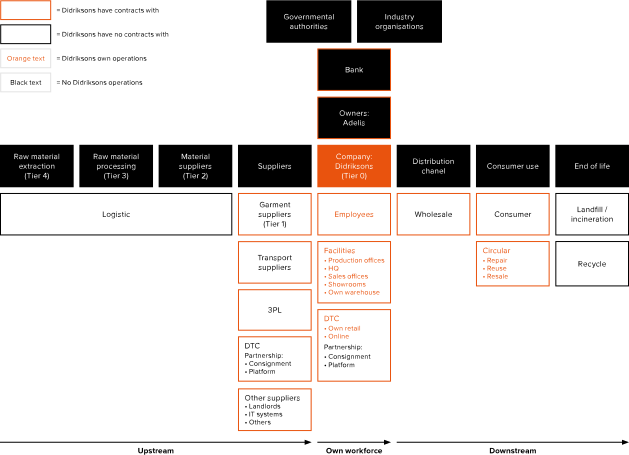
The reporting includes Didriksons' value chain in upstream activities, the company's own operations, and downstream activities. Upstream activities cover production of products and their components, as well as services at various stages of production and sales. Critical activities affecting people occur throughout multiple parts of the value chain and are also central to the company's own operations. Downstream activities include customer management, retailers, and circular activities.
BP-2 Disclosures in relation to specific circumstances
This report has been prepared drawing inspiration from the ESRS, which means that data points previously available are published, whilst data points that are mandatory under ESRS but have not yet been collected are not necessarily included in this year's report.
Didriksons intends to improve its sustainability reporting over time and in line with forthcoming decisions regarding the Omnibus proposal linked to CSRD and ESRS, which will clarify the final reporting requirements.
Time horizons
Time horizons are used when assessing and prioritising material sustainability matters. The time horizon intervals chosen for this report are in accordance with the definitions in ESRS 1 and are as follows:
- Short-term refers to 1 year, which is the reporting period for Didriksons' financial statement.
- Medium-term refers to 1–5 years.
- Long-term refers to more than 5 years.
Estimation of the value chain
The use of estimates such as standard values or industry averages is explained in connection with each respective metric in the report. In earlier stages of the production process, estimates are used for emissions calculations. As traceability in upstream value chain activities is extended, this data will progressively be replaced with primary data, reducing the reliance on estimates.
Disclosures arising from other legislation
This report does not currently include the EU Taxonomy. Didriksons' plan is to incorporate the taxonomy into its reporting when the company elects to report under ESRS.
Governance
GOV-1 Role of the administrative, management and supervisory bodies
Didriksons' governance structure consists of a Board of Directors, a management team, and a cross-functional leadership team (also referred to as the X-team).
As at 31 December 2025, Didriksons' Board of Directors consisted of four (4) members, all of whom are non-executive. The Board possesses sector-specific expertise in areas including the production and development of textile products.
The Board is composed of 50% (50) women and 50% (50) men. Two employee representatives also attend Board meetings with speaking rights, though they are not formal Board members. 25% (25) of Board members are independent of the business.
The Board ensures that members of the management team have appropriate expertise in sustainability matters, including support from the ESG management function at Didriksons' principal owner, Adelis Equity, which assists the Board on strategic sustainability matters.
One of Didriksons' three guiding principles is Responsibility. The management team and each respective function are responsible for integrating responsible and sustainable conduct within their areas of operation.
Within the organisation, reporting to the Chief of Sourcing, there is a CSR Manager whose primary responsibility is to develop and lead the company's CSR strategy and the day-to-day management of CSR processes at Didriksons. The CSR Manager leads a dedicated CSR Group comprising representatives from the management team and relevant functions across the organisation. The purpose of the group is to ensure that the CSR strategy is implemented consistently throughout the entire business and integrated into all relevant business processes.
The board of directors:
- Approves sustainability reporting
- Approves sustainability strategies
- Annual review and revision of sustainability performance
Management team:
- Approves sustainability targets
- Responsible for ensuring sustainability work within each respective department is carried out
CSR Manager:
- Establishes sustainability strategies and targets, and is responsible for results
- Integrates the assessment of impacts, risks, and opportunities into strategy
- Ensures updated policies and monitors progress in sustainability development
GOV-2 Information provided to and sustainability matters addressed by the undertaking's administrative, management and supervisory bodies
Sustainability matters are discussed on an ongoing basis by the Board and management team, and material impacts, risks, and opportunities are integrated into business decisions. The Board regularly discusses sustainability matters linked to the various departments, with representation from management across each area. CSR is an annual agenda item at Board meetings, at which material impacts, risks, and opportunities are discussed in relation to targets, key performance indicators, and the actions taken to reduce Didriksons' negative impact.
Didriksons' CSR Manager provides regular updates to the Chief of Sourcing, who conveys this information to the management team and is likewise responsible for driving sustainability work within the management team. Reporting against targets is reviewed annually during the sustainability reporting process. The material risks and opportunities identified during 2024 through the double materiality assessment were developed with relevant members of the management team, and the results were discussed with the Board. Refer to section SBM-3 for the list of topics identified as material for Didriksons, which were also discussed with the aforementioned parties.
During 2025, no new double materiality assessment was carried out, as Didriksons is awaiting the point at which the company is required to report under CSRD.
GOV-3 Integration of sustainability-related performance in incentive schemes
Neither the Board nor the management team is subject to any incentive schemes or remuneration policies linked to sustainability or climate targets.
GOV-4 Statement on due diligence
Didriksons' due diligence process is founded on the requirement that all supplier partners must sign and adhere to Didriksons' Supplier Code of Conduct, and are responsible for ensuring that any sub-suppliers also comply with the requirements set out therein. Didriksons has adopted the Amfori BSCI Code of Conduct, which is aligned with the UN Guiding Principles on Business and Human Rights and is based on the OECD Guidelines for Multinational Enterprises on Responsible Business Conduct.
Through the purchasing process, ongoing monitoring of social and environmental risks is conducted, along with requirements for remedial action. Didriksons builds this knowledge of its suppliers through frequent visits, during which dialogue takes place to challenge and uphold high social and environmental standards. Collaboration with affected stakeholders is fundamental to Didriksons' due diligence work and long-term relationships, in order to continuously work towards reducing negative impact across the entire business.
To verify supplier compliance with the Supplier Code of Conduct, internal audits are conducted during visits, as well as social audits by third parties. Since 2024, Didriksons has been a member of Amfori, working alongside other members to ensure and drive improvement in environmental considerations and respect for human rights in procurement. Through Amfori, social audits are coordinated which form the basis for identifying negative impacts. When risks are identified, an action plan is developed by each respective supplier and followed up by the purchasing team.
GOV-5 Risk management and internal controls over sustainability reporting strategy
Didriksons' process for managing risks that could affect the reliability and accuracy of sustainability data collection takes place across several stages of internal and external review. Data is collected at departmental level, broadly divided into environmental and social areas. Each department applies controls to ensure the data collected is reliable, by comparing it against previous years where such data is available and by drawing on knowledge of reasonable outcomes within each respective area. The internal control process is followed up through an internal audit to ensure the accuracy of the information in the report. The internal audit is carried out by the full project team for sustainability reporting, which includes parts of the management team, and is also reviewed by the CEO, the Board, and the ESG function of Didriksons' owner. External review is carried out by auditors.
The principal risks to which sustainability reporting is exposed are inaccuracies due to human error or insufficient data. Deviations from prior years are analysed to mitigate this risk. An elevated risk also applies to data collected from upstream stakeholders in the value chain; third-party consultants are therefore engaged to calculate and validate emissions figures.
Strategy
SBM-1 Strategy, business model and value chain
Didriksons is a Swedish brand with roots on the west coast of Sweden and a history stretching back to 1913. The company develops and sells functional outerwear for people who want to spend time outdoors, whatever the weather.
Today, the company's vision is to inspire outdoor interaction, promote a healthy lifestyle, and strengthen social bonds. The business model is built on developing products with high functionality, long durability, and timeless design – contributing to a reduced need for frequent replacement purchases and, in turn, lower resource consumption over time.
Didriksons offers outerwear for women, men, and children. Sales are made through both own channels and retailers. Direct sales take place through a small number of company-owned physical stores, concession stores, the company's own online shop, and digital marketplaces. Didriksons' largest markets are Germany and Sweden. During 2025, 1 (0) new market was added: Slovenia.
Information on the number of employees by geographical area can be found in section S1-6. Didriksons is not involved in any products or services that are prohibited in certain markets, such as the production of fossil fuels, weapons, or tobacco.
Didriksons' sustainability strategy is to protect people and use resources responsibly throughout the value chain. Strategic goals such as increasing traceability – and thereby knowledge of the value chain – enable informed decisions that drive sustainable development across both environmental and social dimensions. Strategic areas have been defined within environmental and social responsibility, in which Didriksons has a responsibility to actively drive progress within its operations and value chain.
These areas include labour rights in the value chain, such as child and forced labour, material use, water consumption, circular products, and climate change mitigation.
Didriksons' strategic areas are linked to the United Nations Sustainable Development Goals (SDGs), which Didriksons can promote and reduce its negative impact on through its day-to-day work. To further channel its sustainability focus, an internal prioritisation has been established to concentrate on two areas: water, and responsible consumption and production. Key performance indicators are linked to each sustainability area and are reviewed annually. Sustainability targets encompass Didriksons' products and services, customer groups, and markets.
The areas are as follows:
- Clean water and sanitation (SDG 6)
- One of Didriksons' highest-priority goals is to reduce water consumption and improve water quality.
- Decent work and economic growth (SDG 8)
- It is of the utmost importance to Didriksons that everyone who works for Didriksons, wherever they are in the value chain, has fair working conditions and can work in a safe and secure environment.
- Responsible consumption and production (SDG 12)
- For Didriksons to continue producing products, production processes must be continuously developed to minimise their impact on ecosystems and to reduce the company's environmental footprint. Extending the lifespan of garments and contributing to a circular economy are also part of Didriksons' responsibility.
- Climate action (SDG 13)
- Didriksons' goal is to reduce the use of the world's resources by using materials as responsibly as possible, and to transition to renewable energy and improve energy efficiency throughout the entire value chain.
- Partnerships for the goals (SDG 17)
- Strengthening partnerships across all parts of the value chain to collectively address sustainability challenges and drive the transition alongside partners.
Business model and value chain
Didriksons' value chain is global. It consists largely of activities linked to production, warehousing, distribution, and consumer use, as well as end-of-life management of products. Throughout the value chain, Didriksons impacts people and the environment on a global scale. Material production and garment manufacturing take place primarily in Asia, with global transport routes spanning continents. In Europe, activities encompass warehousing, distribution and retail, as well as consumer flows, product circularity, and end-of-life product and service streams. Activities related to Didriksons' distribution and consumers are present across most of Europe, and on a smaller scale in North America. Didriksons has a significant impact and a substantial responsibility towards all those involved in its value chain.
Didriksons' value chain encompasses several critical activities both upstream, within its own operations, and downstream. Key activities include the sourcing of raw materials, labour, and resources in the form of energy and water. The methods used to source and secure resources such as raw materials, water, and energy are described in E1, E3, and E5. The measures for securing human rights for Didriksons' own workforce are outlined in section S1. Didriksons' methods for ensuring human rights throughout the value chain operate through long-term partnerships and active membership in Amfori, through which third-party social audits are conducted across the value chain.
The main stakeholders and activities in Didriksons' value chain:
Upstream
- Extraction of raw materials
- Processing of raw materials
- Material production
- Garment manufacturing
- Transport of materials and products
- Third-party warehousing
- Sales through third-party channels
- Other suppliers
Own operations
- Employees
- Own facilities (headquarters, warehouse, sales offices)
- Own sales channels
Downstream
- Retailers
- End-use
- Circular product flows
- End-of-life product flows
SBM-2 Interests and views of stakeholders
Didriksons places high value on partnership and collaboration. It is therefore very important to involve various stakeholders in order to access valuable insights into which sustainability areas should be prioritised with regard to its operations and value chain. Through an enhanced understanding of its stakeholders and their interests, Didriksons strengthens its ability to shape a business that creates value for those stakeholders and builds a long-term action plan. The stakeholder dialogue was conducted in 2024 and will be followed up when a new double materiality assessment is carried out, in order to incorporate stakeholder perspectives. The insights gained from the stakeholder dialogue are taken into account when updating strategy. Analysis of stakeholder perspectives and interests is shared with relevant members of the management team and with the Board during the review of materiality assessment results.
The table below presents Didriksons' key stakeholders, how they have been engaged, and the insights that the stakeholder dialogue has produced.
| Key stakeholders | Method of engagement | Material issues |
|---|---|---|
| Employees |
| For employees, water, material choices, climate, and pollution are important topics, alongside working conditions and responsible production. New sustainability areas raised on several occasions include how circular business models could become a growing sustainability priority for Didriksons. |
| Customers |
| Customers consider circular flows, reduced climate impact, a transparent value chain, and working conditions in the value chain to be important areas. When making purchasing decisions, they value durable products they intend to wear for a longer period of time, and materials with a sustainability commitment. |
| Suppliers and other business partners |
| Climate, material choices, pollution, and working conditions are consistently the most material issues for Didriksons' suppliers. For garment and material suppliers, water is also highlighted as a material issue, and responsible production is raised by retailers and logistics partners. |
| Owners and bank |
| Circular flows are highlighted as a material area to focus on going forward, according to both owners and the bank. In dialogue with owners, working conditions, pollution, and climate are material issues – also identified by the bank, which additionally raises the question of water. |
| Authorities and industry organisations |
| The most material issues are linked to climate, working conditions in the value chain, traceability, material choices, eco-design, and circular flows. |
SBM-2 S1 Interests and views of stakeholders related to the own workforce
Respect for human rights is a fundamental part of Didriksons' operations, strategy, and business model. There is zero tolerance for discrimination, harassment, sexual harassment, and bullying.
Annually, the interests, opinions, and rights of Didriksons' employees are gathered through an anonymous employee survey. Information on employee wellbeing is also collected through performance reviews conducted semi-annually. Feedback from these surveys and meetings helps managers and leadership to identify areas for improvement based on employee needs and reduces the risk of adverse impacts.
SBM-2 S2 Interests and views of stakeholders related to workers in the value chain
Respect for the human rights of workers in the value chain is central to Didriksons' operations, strategy, and business model. The purchasing strategy includes due diligence processes to respect the interests, views, and rights of workers throughout the value chain. These are identified through long-term partnerships, a limited number of supplier partners, and frequent visits to and dialogue with supplier partners in the value chain. Through the purchasing process, human rights risks are continuously identified and analysed, and identified impacts are used as the basis for developing purchasing processes and business plans.
The business model is built on a global value chain, which increases the risk of human rights violations. The business decisions made by Didriksons and the requirements placed on supplier partners affect workers throughout the value chain.
Didriksons continuously works to improve understanding and traceability across its value chain. Through its due diligence process and procurement policy, the company aims to reduce adverse impacts within the global value chain in which it operates.
Through membership of Amfori, Didriksons collaborates with other parties to conduct third-party audits under the Business Social Compliance Initiative (BSCI), in which compliance with the Supplier Code of Conduct is reviewed. Through these audits, responses regarding working conditions are gathered on an ongoing basis, forming the basis for ensuring respect for the human rights of workers in the value chain.
SBM-3 Material impacts, risks and opportunities, and their interaction with strategy and business model
Didriksons has conducted a double materiality assessment to identify the sustainability matters most significant from both an impact and a financial perspective. This section includes a table describing the material impacts, financial risks, and opportunities identified within the following topic-specific standards:
- E1 Climate change
- E2 Pollution
- E3 Water and marine resources
- E5 Resource use and circular economy
- S1 Own workforce
- S2 Workers in the value chain
- S4 Consumers and end-users
| ESRS standard and sub-topic | Value chain | Impact, risk or opportunity | Description of impact / description of financial risks and opportunities | Time horizon |
|---|---|---|---|---|
| E1 Climate change mitigation | Entire value chain | Negative impact, actual | By producing and distributing products that rely on fossil fuels, Didriksons contributes to greenhouse gas emissions. | Long-term (>5 years) |
| E1 Climate change mitigation | Entire value chain | Positive impact, potential | By offering a product range developed with a focus on long service life, durable materials, and versatile use, the need for frequent clothing replacement can be reduced, which can contribute positively to mitigating climate change. | Long-term (>5 years) |
| E1 Climate change mitigation | Entire value chain | Risk | Transitioning to lower-emission production and materials may increase costs, as investment in technology and the procurement of certified products and materials will be required to decarbonise the value chain. | Long-term (>5 years) |
| E1 Climate change mitigation | Entire value chain | Opportunity | Opportunity to reduce transport costs through a lower share of air freight and fewer fossil fuel-dependent shipments. Strong commitment to climate action and successful emissions reduction can enhance brand credibility and consequently increase full-price sales. High-quality data and documentation reduces the cost of audits. | Medium-term (1–5 years) |
| E1 Energy | Entire value chain | Negative impact, potential | Didriksons contributes to greenhouse gas emissions due to a large proportion of finite energy sources in an energy-intensive production process. | Short-term (<1 year) |
| E2 Chemicals | Upstream, Downstream | Negative impact, potential | The production of technical textiles requires a high proportion of chemicals, which, if misused, can generate a risk of pollution. | Medium-term (1–5 years) |
| E2 Chemicals | Upstream, Downstream | Risk | Increased costs linked to chemical penalties could be business-critical given the complex textile value chain, which requires robust risk management processes. Increased costs for chemical testing to ensure compliance with chemical legislation may also arise as requirements for enhanced traceability and evidence increase. | Medium-term (1–5 years) |
| E3 Water consumption | Entire value chain | Negative impact, actual | High water consumption arising from wet finishing processes in textile manufacturing, which can contribute to a negative water footprint. The predominant use of synthetic fibres over natural fibres significantly reduces water consumption. | Medium-term (1–5 years) |
| E3 Water consumption | Entire value chain | Opportunity | Solid progress in line with the strategy of prioritising water-saving dyeing techniques represents an opportunity in terms of brand trust and is a commercial opportunity. | Medium-term (1–5 years) |
| E5 Resource inflows (materials) | Upstream | Negative impact, actual | The use of synthetic fibres, which conventionally derive from finite raw materials, has adverse consequences in the value chain and represents an environmental burden. | Medium-term (1–5 years) |
| E5 Resource inflows (materials) | Upstream | Opportunity | Product costs represent one of Didriksons' largest expenses; by reducing the number of components and improving material efficiency to use less material, every reduction will represent a significant financial opportunity. | Medium-term (1–5 years) |
| E5 Resource outflows (circular products) | Downstream | Positive impact, actual | By offering products that last and are used throughout their full lifecycle, Didriksons contributes positively to reducing unused resources. | Medium-term (1–5 years) |
| E5 Resource outflows (circular products) | Downstream | Opportunity | Didriksons' products already generate many circular business opportunities today, though not within Didriksons' own operations. The commercial opportunity in this area is therefore significant – both through increased primary sales as consumers factor in resale value, and for Didriksons to generate revenue through circular services, thereby decoupling emissions from economic growth. | Medium-term (1–5 years) |
| E5 Waste | Entire value chain | Negative impact, actual | Production and packaging waste, and end-of-life waste, may end up as landfill where waste sorting options are absent or inadequate. | Medium-term (1–5 years) |
| E5 Waste | Downstream | Risk | The EU Textile Strategy includes requirements for EPR (Extended Producer Responsibility), which means increased per-product costs for managing end-of-life products. | Medium-term (1–5 years) |
| S1 Working conditions | Own operations | Positive impact, actual | By offering many attractive benefits to employees, Didriksons contributes to a secure workplace and positively to people's wellbeing at work. | Medium-term (1–5 years) |
| S1 Working conditions | Own operations | Negative impact, potential | Uneven product flows may contribute to elevated work-related risks in warehousing during peak season. The risk of robbery for retail employees may have adverse consequences for employee wellbeing. | Medium-term (1–5 years) |
| S1 Working conditions | Own operations | Opportunity | Low staff turnover and high uptake of wellness activities are linked to reduced personnel costs associated with recruitment and sickness absence. | Medium-term (1–5 years) |
| S1 Equal treatment and equal opportunities for all | Own operations | Negative impact, potential | Uneven gender distribution, gender pay gaps, and low diversity may have adverse consequences for employee wellbeing. | Medium-term (1–5 years) |
| S2 Working conditions | Upstream, Downstream | Negative impact, potential | Uneven product flows throughout the year may pose a risk of high overtime, which can lead to adverse impacts on the health and safety of workers. Sub-suppliers to Didriksons' suppliers whose compliance with the Supplier Code of Conduct is not monitored may present a risk to workers' rights and safety, potentially giving rise to health and safety issues. | Medium-term (1–5 years) |
| S2 Working conditions | Upstream, Downstream | Risk | The business risk is high, but is reduced through third-party auditing and long-term relationships. Long-term partnerships and a limited number of suppliers enable robust oversight of compliance with the Code of Conduct and reduce the risk of non-compliance, and consequently reduce the risk of unexpected fines or inspection costs. | Medium-term (1–5 years) |
| S2 Equal treatment and equal opportunities for all | Upstream, Downstream | Negative impact, potential | Sub-suppliers to Didriksons' suppliers whose compliance with the Supplier Code of Conduct is not monitored may present a risk of discrimination in the form of unequal pay, sexual harassment, or limited career opportunities, which may have adverse consequences for their wellbeing, safety, and career prospects. | Medium-term (1–5 years) |
| S2 Equal treatment and equal opportunities for all | Upstream, Downstream | Risk | The business risk is high, but is reduced through third-party auditing and long-term relationships. Long-term partnerships and a limited number of suppliers enable robust oversight of compliance with the Code of Conduct and reduce the risk of non-compliance, and consequently reduce the risk of unexpected fines or inspection costs. | Medium-term (1–5 years) |
| S2 Other work-related rights: child labour and forced labour | Upstream, Downstream | Negative impact, potential | Sub-suppliers to Didriksons' suppliers whose compliance with the Supplier Code of Conduct is not monitored may present a risk of child and forced labour, which may have adverse consequences for their schooling, health, and overall development. | Medium-term (1–5 years) |
| S2 Other work-related rights: child labour and forced labour | Upstream, Downstream | Risk | Non-compliance with the Code of Conduct may be associated with a risk of high costs, including investigation costs in the form of increased demand for audits, as well as potential fines and reduced sales due to reputational damage or scandal. Scandals may be critical given that people are involved. Strong partnerships reduce the likelihood of such events. | Medium-term (1–5 years) |
| S4 Information-related impacts for consumers and/or end-users: privacy and information | Downstream | Negative impact, potential | By withholding sustainability information due to green claims concerns, Didriksons may contribute to so-called 'green hushing', meaning that customers cannot make purchasing decisions with sustainability as a parameter and the sustainable transition may thereby be hindered. | Medium-term (1–5 years) |
| S4 Information-related impacts for consumers and/or end-users: privacy and information | Downstream | Risk | Online sales and the company's digital presence are directly linked to GDPR risks, which if not managed correctly could result in increased costs due to fines and remediation measures. The company may also be held liable in the event of a data breach or inadequate protection of personal data, leading to litigation costs, business losses, and reputational damage. | Medium-term (1–5 years) |
| S4 Personal safety of consumers and/or end-users | Downstream | Negative impact, potential | If Didriksons fails to ensure compliance with children's clothing safety legislation, there is a risk that consumers may be exposed to chemicals or a choking hazard, which would pose health and safety risks. | Medium-term (1–5 years) |
| S4 Personal safety of consumers and/or end-users | Downstream | Risk | The forthcoming initiative to increase sales in the US market may expose the company to higher regulatory and legal risks, particularly in relation to consumer protection laws. Non-compliance with local regulations, such as product labelling, marketing practices, or returns policies, could lead to significant financial penalties, legal costs, and reputational damage. | Medium-term (1–5 years) |
| S4 Social inclusion for consumers and/or end-users | Downstream | Positive impact, potential | If Didriksons fails to communicate in an inclusive manner, there is a risk that customer groups feel marginalised, which may contribute to damaging consumers' self-esteem. | Medium-term (1–5 years) |
The identified material impacts, financial risks, and opportunities have both actual and potential effects on Didriksons' value chain, business model, and strategy, as well as on decision-making. The results of the double materiality assessment are used to strengthen strategic work. At present, there is no formal process in place to integrate the identified impacts, risks, and opportunities into the value chain, business model, strategy, or decision-making.
The current material impacts, financial risks, and opportunities correspond to those sustainability areas previously identified as material by Didriksons. A change in methodology has occurred in that the financial perspective was not taken into account in previous assessments.
One sustainability area not identified as material for Didriksons to report on is corruption and bribery, which is often considered a significant risk within a global value chain. Based on the scoring of impacts, risks, and opportunities, this area fell outside the reporting obligation due to threshold values. Didriksons' anti-corruption policy, signed by all employees, reduces the risk of bribery and corruption within the company's own operations. A risk of adverse impact may arise in the sales channel for Didriksons' goods through agents, which accounts for a minor proportion of Didriksons' total business; the impact is local and results in a low impact score. The financial risk – namely fines and reputational damage – is assessed as medium in size based on the financial thresholds set, whilst the probability is assessed as low given Didriksons' high degree of control over its value chain. The section on S2 Workers in the Value Chain provides further information on how Didriksons works to prevent bribery and corruption.
Impact, risk and opportunity management
IRO-1 Description of the processes to identify and assess material impacts, risks and opportunities
During 2024, Didriksons conducted a double materiality assessment to identify the company's impacts, risks, and opportunities linked to sustainability matters. The assessment takes into account both impact materiality and financial materiality – that is, both impacts on people and the environment, and the financial effects on Didriksons arising from external sustainability-related factors, which have been analysed as the sustainability risks and opportunities facing the business.
Method description
The double materiality assessment process encompassed four key steps, the first of which was to understand the context in which the analysis was conducted. In accordance with ESRS guidelines, this required mapping the entire value chain, taking into account all relevant dimensions – upstream, within the company's own operations, and downstream. It was essential to analyse how value chain activities at these three levels affect and are affected by various IROs (Impacts, Risks, and Opportunities), and to identify any dependencies.
In parallel with the value chain analysis, a stakeholder mapping exercise was conducted to identify and categorise key stakeholders. This process involved gathering relevant information to better understand their needs and expectations, and to ensure their perspectives were taken into account in the analysis. Key stakeholders for Didriksons include employees, customers, suppliers, owners and the bank, as well as authorities and industry organisations.
The findings from the value chain and stakeholder analysis were presented in a series of workshops with key business functions, including finance, purchasing, operations, CSR, and the company's owner (Adelis). During these workshops, the group conducted a thorough review of impacts, risks, and opportunities across all ten ESRS standards at sub-topic level, covering the entire value chain – upstream, own operations, and downstream.
Once the insights from stakeholder dialogues and workshops had been consolidated, a prioritisation of all sub-topics was proposed and agreed by consensus within the group. The final results of the double materiality assessment were then presented to and approved by the Board.
Process for identifying impacts
For each impact identified as having an effect on people and the environment, the following criteria were considered during the analysis: each impact was identified as positive or negative, actual or potential, and for which parts of the value chain the impact was identified, thereby clarifying whether the impact results from the company's own operations or from business relationships.
When identifying impacts that arise or may arise as a result of Didriksons' operations, consideration was given to business-specific activities, business relationships, and geographical areas that give rise to an elevated risk of adverse impacts. This includes activities and business relationships upstream in the value chain conducted in geographical regions such as China, Bangladesh, India, Vietnam, and Sri Lanka.
Each impact was scored based on the following parameters. Negative impacts were scored based on severity (scale), geographical spread (scope), reversibility, and likelihood. Positive impacts were scored based on scale, scope, and likelihood. For impacts relating to human rights, severity was prioritised over likelihood.
Impacts were scored on a scale of 1–5 for each parameter, where the score corresponds to the following:
- Scale
- The severity of the negative or positive impact on society or the environment, where 1 represents a minimal effect and 5 represents an impact causing major disruption with long-lasting effects.
- Scope
- The extent to which the negative or positive impact is widespread across society or the environment, where 1 represents a small area affecting few individuals, whilst 5 represents global consequences.
- Reversibility
- Whether and to what extent the negative impact can be restored or remedied, where 1 represents easy to remedy and 5 represents a permanent effect.
- Likelihood
- The probability of the impact materialising, on the following scale: Very low: 0–5% (1), Low: 5–25% (2), Likely: 25–60% (3), Very likely: 60–90% (4), Common occurrence: >90% (5).
Thresholds for impacts and financial effects
Thresholds were established for impacts and financial effects. The thresholds are designed to account for moderate to high impact/financial effect in combination with medium to high likelihood, whilst enabling more targeted efforts for IROs above these thresholds. Thresholds were set as follows:
- Very high (5) impact/financial effect will always be material regardless of likelihood.
- High (4) impact/financial effect is material in all scenarios except very low likelihood.
- Moderate (3) impact/financial effect is material in all scenarios except low to very low likelihood.
- Low (2) impact/financial effects are not material.
- Very low (1) impact/financial effects are not material.
Process for identifying risks and opportunities
For each financial risk or opportunity identified, the following criteria were considered during the analysis: each identified financial effect was categorised as negative (risk) or positive (opportunity), by type of financial effect, and for which parts of the value chain the risk or opportunity was identified. In the analysis to determine risks and opportunities, Didriksons considered its entire value chain, taking into account the relationships between impacts and dependencies linked to risks and opportunities.
Risks and opportunities were scored based on their magnitude and likelihood, on a scale of 1–5 for each parameter:
- Financial magnitude
- The size of the financial effect, on the following scale:
- 1: 0–1% of EBITDA
- 2: 1–3% of EBITDA
- 3: 3–5% of EBITDA
- 4: 5–10% of EBITDA
- 5: >10% of EBITDA
- Likelihood
- The likelihood of the risk or opportunity materialising, on the following scale:
- Very low: 0–5% (1)
- Low: 5–25% (2)
- Likely: 25–60% (3)
- Very likely: 60–90% (4)
- Common occurrence: >90% (5)
Environmental information
E1 Climate change
Governance
E1-1 Transition plan for climate change mitigation
Didriksons' target is to achieve an absolute reduction in greenhouse gas emissions of at least 50% by 2030, relative to 2018 for Scope 1 and 2, and 2020 for Scope 3. This target aligns with the Paris Agreement, which aims to limit global warming to 1.5°C.
Since 2019, Didriksons has been a member of The Scandinavian Textile Initiative for Climate Action (STICA). The purpose of STICA is to enable collaboration between textile companies to reduce the industry's total greenhouse gas emissions in line with the UN Framework Convention on Climate Change and the Paris Agreement. The initiative provides a network through which members can collaborate, share best practice, develop new solutions, and access climate-specific data and innovations.
In accordance with the Greenhouse Gas (GHG) Protocol, Didriksons maps its greenhouse gas emissions across Scope 1, 2, and 3 annually in order to understand the impact across the entire value chain and concentrate action where the greatest impact lies.
Emissions in the Purchased Goods and Services category, followed by the Transport and Distribution category, represent Didriksons' largest climate impact and are therefore the primary focus for reduction measures. Identified measures include the continued transition to renewable energy, the phasing out of fossil fuels, and the optimisation of transport methods.
Material choice is the single most decisive measure Didriksons has identified for achieving its climate targets. Work therefore continues to systematically increase the proportion of recycled and organic materials in the company's products. In parallel, efforts are being intensified to use fabrics dyed using the solution dyeing technique – a method that reduces the use of water, chemicals, and energy – and to increase the use of materials produced through lower-emission processes.
In the work to improve the company's climate footprint in production, long-term partnerships constitute a central driver and key lever for change. Collaboration with carefully selected partners creates the conditions for a high level of knowledge about value chain impacts, which underpins decision-making that limits climate change. Didriksons is working towards greater traceability in the value chain through deliberate choices of production facilities and suppliers. Collaboration throughout the entire value chain is essential to achieving the climate targets.
Didriksons' core values have always been to protect and take responsibility for the resources the company uses. The goal is to leave as small a climate footprint as possible across its value chain. During 2025, work on solidifying the transition plan has continued, whilst the initiatives identified as focus areas have been integrated into the company's forward strategy.
During 2026, Didriksons will continue work on its transition plan by further quantifying the impact of the measures currently being implemented, and by identifying additional areas that can support the transition plan in achieving Didriksons' climate targets.
Didriksons' transition plan is not yet finalised and therefore has not been approved by the Board of directors, aligned with the company's business strategy, or integrated into financial planning. Already-implemented measures forming the basis of key performance indicators have been approved by the Board of directors and are reviewed annually.
Didriksons' progress
Didriksons has increased its total emissions by 8.3% since the 2020 base year, driven primarily by increased sales. In terms of emissions intensity, Didriksons has reduced tCO₂e per turnover by 28% compared to the base year, albeit with variation between years, which indicates a degree of decoupling between emissions and revenue over time. Compared to the prior year, total emissions decreased by 0.1%.
- Scope 1 and 2
-
Didriksons has reduced its Scope 1 emissions by 45% and its Scope 2 emissions by 50% since the 2018 base year, meaning that the emissions intensity for these two scopes (tCO₂e/MSEK) has decreased by 67% (67.5).
Compared to the prior year, Scope 1 emissions have decreased by 49%, whilst Scope 2 emissions have increased by 29%. This means the overall emissions intensity has increased by 2% (-29) compared to the prior year.
The reduction in Scope 1 is a result of phasing out fossil fuel-powered vehicles. The increase in Scope 2 is driven primarily by a new store in Germany operating on non-renewable electricity.
Didriksons' continued focus will be on increasing the proportion of electric vehicles and on securing renewable energy contracts for electricity consumption to the greatest extent possible.
- Scope 3
-
In 2025, emissions in the Purchased Goods and Services category decreased by 2% (+36) compared to the prior year, despite Didriksons increasing its volume of purchased products. The decrease is attributable to changes in the product mix. Emissions from material, fabric, and garment production account for 98%.
Purchased Goods and Services account for 91% (93) of Didriksons' total emissions; the next largest category is Transport and Distribution, which accounts for 7% (5). The increase in transport emissions compared to the prior year is a result of disruptions to global logistics chains, primarily linked to longer transport routes as cargo vessels have not travelled via the Suez Canal.
Going forward, Didriksons will carefully balance its strategic growth plan with a clear focus on optimising the value of each product and manufacturing products in materials that more substantially support climate targets.
Didriksons has not yet established a concrete transition plan for how the climate target is to be achieved, but intends to continue the work of concretising its transition plan during 2026. A target for achieving climate neutrality for Didriksons has likewise not yet been established.
E1-2 Policies related to climate change mitigation and adaptation
Didriksons has established an Environmental Policy that addresses its material impacts, risks, and opportunities relating to climate change mitigation and adaptation. This policy describes Didriksons' commitment to respecting the environment and safeguarding the climate in its own operations, across the upstream and downstream value chain, and in procurement, manufacturing, and logistics.
The policy includes Didriksons' commitments and actions related to:
- Climate change
- Pollution
- Water
- Biodiversity and ecosystems
- Circular economy and resource use
Didriksons has committed to reducing its total greenhouse gas emissions across Scope 1, 2, and 3 by 50% by 2030, in line with science-based targets and the Paris Agreement's 1.5°C goal.
The environmental policy encompasses:
- Climate change mitigation
- Focus on reducing greenhouse gas emissions, with the greatest emphasis on the supply chain, using low-carbon materials, renewable energy, and intensified supplier collaboration.
- Climate change adaptation
- Focus on the need to further develop and adapt to climate change within Didriksons' business strategy, including in strategic purchasing, sales, and growth plans. Also on the importance of engaging all areas and departments of the company, and, through enhanced industry collaboration, of promoting the transition to a circular economy.
The Environmental Policy underpins the transformation of Didriksons' operations, including transport and supply chains, towards renewable energy sources and improved energy efficiency. Particular emphasis is placed on decarbonising textile processing and manufacturing, and on increasing the use of lower-impact materials, as these represent the areas of greatest impact for Didriksons.
E1-3 Actions and resources in relation to climate change policies metrics and targets
Didriksons focuses on actions that contribute to decarbonising the company's operations and value chain across Scope 1, 2, and 3. These actions encompass a transition to fossil-free and renewable energy sources, improved energy efficiency, reduced transport emissions, changes and development in material choices, and processes within the supply chain.
Didriksons' actions:
Scope 1 and 2
- Current actions
- Where it is possible to choose energy contracts, Didriksons purchases renewable electricity for its stores and offices.
- Future plans
- Didriksons intends to continue transitioning energy sources within its own operations to 100% renewable and origin-certified, and to ensure renewable energy is secured when establishing new premises. The transition to electric vehicles will also continue.
Scope 3, transport
- Current actions
- Local road freight using lorries powered by biofuel or electricity where possible. Sea freight is the primary choice for transport from Asia.
- Future plans
- Didriksons intends to continue using and seeking less carbon-intensive alternatives for its transport, such as electric trucks for road freight, and avoiding air freight for shipments from Asia.
Scope 3, materials
- Current actions
- Didriksons is working to increase the proportion of materials dyed using the solution dyeing technique and to increase the share of recycled synthetic fibres in the materials used in its products. During 2024, Didriksons launched the first jacket made from polyamide produced using raw materials with a lower climate footprint than conventionally produced polyamide. During 2025, the material has been implemented in production at a greater scale. The results are expected to be reflected in emissions calculations for 2026.
- Future plans
- Didriksons considers that increased use of recycled materials, the solution dyeing technique, and the development of manufacturing processes with a focus on minimising the carbon footprint represent the measures with the greatest potential to reduce the company's greenhouse gas emissions. This is particularly significant given that the largest share of the company's total emissions – 83.5% (84) in 2025 – derives from raw material extraction and subsequent material processing and textile production. Products incorporating materials in which the solution dyeing technique is applied to recycled fibres are under development. Combining these two initiatives offers further opportunity for emissions reductions.
Didriksons intends during 2026 to conduct a Life Cycle Assessment (LCA) with the aim of gaining a greater understanding of the use phase. This is work that is hoped to yield relevant insights into products' carbon emissions throughout their entire lifecycle, from raw material to end-of-life. Didriksons also intends to invest in system support to underpin the work of climate emissions analysis.
Scope 3, suppliers
- Current actions
- Didriksons has collected primary data from the majority of its tier 1 and tier 2 suppliers, and has initiated dialogue on the transition to renewable energy sources. Didriksons is working to map all entities involved in the production of its products and materials. During 2025, Didriksons invested in system support to systematise structured data collection and the mapping of its suppliers.
- Future plans
- Didriksons intends to intensify its dialogue with tier 1 and tier 2 suppliers to collect data, identify shared barriers, and collaborate to establish a transition plan. Within the Purchased Goods and Services category, tier 1 manufacturing accounts for 6.7% (7) and tier 2 production accounts for 40% (41) of total emissions in this category for 2025. Collaborating with suppliers to implement energy efficiency programmes and to increase the procurement of renewable energy would therefore help reduce manufacturing emissions. Didriksons is aware of the challenges arising from limited direct relationships with tier 3 and tier 4 suppliers, and is working to map more suppliers in the coming years in order to further improve transparency and data collection across in the supply chain.
Expected consequences of Didriksons' actions
Not all of Didriksons' actions have been quantified yet. Didriksons intends to continue with quantification during 2026.
Dependence on resources and collaboration
- Scope 3, transport
- Ongoing dialogue with business partners is key to understanding the transition to renewable fuels and the related costs.
- Scope 3, materials
- Collaboration with industry partners is critical and an important factor in success.
- Scope 3, suppliers
- Didriksons supports its suppliers in the energy transition through knowledge-sharing and policy-related dialogue, to increase awareness of the importance of renewable energy and energy-efficient manufacturing processes.

Metrics and targets
E1-4 Targets related to Climate change mitigation and adaptation
Didriksons has established climate-related targets in line with its Environmental Policy for climate change mitigation and adaptation.
| Related policy and brief description of the relationship to the policy's objectives | The climate-related target is linked to Didriksons' Environmental Policy for climate change mitigation and adaptation. |
| Target | By 2030, Didriksons will have reduced absolute market-based CO₂e emissions by 50% for Scope 1, 2, and 3 compared to the base year of 2020. |
| Framework underpinning the target | The target is consistent with the Paris Agreement's goal of limiting global warming to 1.5°C. |
| Target scope | The target encompasses the entire value chain (upstream, own operations, and downstream). Scope 3 covers categories 1, 3, 4, 6, and 9. |
| Base year for the target | 2020 |
| Base year value for the target | 336 tonnes CO₂e for Scope 1 and 2, and 16,928 tonnes CO₂e for Scope 3 |
| 2025 result | 170 tonnes CO₂e for Scope 1 and 2 (50% reduction) and 18,452 tonnes CO₂e for Scope 3 (9% increase) |
| Additional information | Didriksons has set a more ambitious target to reduce its absolute Scope 1 and 2 emissions by 60% against the 2018 base year. The target was raised from 50% to 60%, as the 50% target had already been achieved. |
E1-5 Energy consumption and mix
Energy consumption data is based on a combination of primary data and estimates, and includes both consumption and energy sources. To ensure a conservative methodology, the source is assumed to be fossil-based where the energy source is not clearly defined. Didriksons' energy consumption is purchased. In its own operations, Didriksons purchases electricity from renewable sources wherever it is possible to enter into such contracts.
| 2024 | 2025 | Change % (2024–2025) | |||
|---|---|---|---|---|---|
| MWh | Share % | MWh | Share % | ||
| Crude oil and oil-based products | 189.5 | 139.2 | |||
| Natural gas | 12.7 | 9.7 | |||
| Purchased or acquired electricity, heat, or steam | 744.6 | 279.4 | |||
| Total fossil energy consumption | 946.8 | 66.00% | 428.3 | 29.74% | -54.7% |
| Total nuclear energy consumption | 4.3 | 0.30% | 43.1 | 2.99% | 902% |
| Renewable sources, including biomass | 16.0 | 56.3 | |||
| Purchased renewable electricity, heat, or steam | 466.9 | 912.3 | |||
| Self-generated non-fuel-based renewable energy | 0 | 0 | |||
| Total renewable energy consumption | 482.9 | 33.70% | 968.6 | 67.26% | 100.5% |
| Total energy consumption | 1,434 | 100.00% | 1,440 | 100.00% | |
Didriksons operates within a sector with high climate impact, as its business falls under Section G, Wholesale and Retail Trade, in accordance with the Statistical Classification of Economic Activities in the European Community (NACE).
E1-6 Gross greenhouse gas emissions for scope 1, 2, 3, and total greenhouse gas emissions
| Retrospective | ||||
|---|---|---|---|---|
| Scope | Base year 2020 | 2024 | 2025 | Change % (2020–2025) |
| Scope 1 Mobile and stationary combustion | 41 | 61 | 31 | -26% |
| Scope 2 Market-based energy consumption | 227 | 109 | 140 | -38% |
| Scope 3:1 Purchased goods and services | 15,093 | 17,355 | 16,992 | 12.6% |
| Scope 3:2 Capital goods | ||||
| Scope 3:3 Fuel- and energy-related activities (not included in Scope 1 or 2) | 37 | 30 | 27 | -27% |
| Scope 3:4 Upstream transport and distribution | 1,751 | 945 | 1,255 | -28% |
| Scope 3:5 Waste generated in operations | ||||
| Scope 3:6 Business travel | 43 | 128 | 168 | 293% |
| Scope 3:7 Employee commuting | ||||
| Scope 3:8 Upstream leased assets | ||||
| Scope 3:9 Downstream transport | 4 | 7 | 11 | 170% |
| Scope 3:10 Processing of sold products | ||||
| Scope 3:11 Use of sold products | ||||
| Scope 3:12 End-of-life treatment of sold products | ||||
| Scope 3:13 Downstream leased assets | ||||
| Scope 3:14 Franchises | ||||
| Scope 3:15 Investments | ||||
| Total greenhouse gas emissions | 17,196 | 18,634 | 18,623 | 8.3% |
In accordance with the GHG Protocol's guidelines for Scope 2, emissions from electricity consumption are calculated using a location-based or market-based method. For Didriksons' climate accounting, the market-based method is used. The table below shows the difference between the two calculation methods.
| Emissions tonnes CO₂e | ||
|---|---|---|
| 2024 | 2025 | |
| Market-based method | 107.3 | 139.8 |
| Location-based method | 92.5 | 105.4 |
| Difference | 14.8 | 34.4 |
Calculation method for Greenhouse Gas Emissions (GHG)
The GHG Protocol has been used to calculate Didriksons' climate emissions, as it is the most widely recognised global standard for calculating greenhouse gas emissions from a company's operations. The calculations have been carried out in accordance with the three associated standards: The Corporate Standard, The Corporate Value Chain (Scope 3) Standard, and Technical Guidance for Calculating Scope 3 Emissions.
In accordance with the GHG Protocol, a company's emissions are reported across three scopes, where:
- Scope 1 represents direct emissions from operations.
- Scope 2 includes indirect emissions generated in the production of purchased electricity, district heating, cooling, and process steam.
- Scope 3 encompasses other indirect emissions, both upstream and downstream in the value chain, arising from activities such as purchased travel, transport, production of purchased goods and services, and employee commuting.
The emission factors used are provided by experienced third-party sustainability consultants. Didriksons has engaged a third-party consultancy to compile the company's collected climate data and calculate its results.
Scope 1 and 2
Scope 1 and 2 were calculated to the greatest extent possible using primary activity data, such as kilowatt hours or kilometres. The emission factors used in the calculations are sourced from the Swedish Transport Administration (Trafikverket), the Swedish Energy Markets Inspectorate (Ei), IEA, and AIB European Residual Mixes.
Assumptions in Scope 1 and 2 include estimates for electricity, heat, and refrigerant leakage. Where no activity data was available for energy consumption, estimates for different facility types from the Swedish Energy Agency (Energimyndigheten) were used.
Scope 3
Category 1: Purchased goods and services
In 2025, Didriksons collected primary data from one tier 1 supplier, three tier 2 suppliers, one tier 3 supplier, and LCA data from one tier 4 supplier. Total emissions per supplier were calculated based on reported primary data for electricity, fuel consumption, and packaging (for tier 2 suppliers only).
For reporting tier 1 suppliers, emissions are allocated to Didriksons based on the number of products purchased per supplier. If the factory reported that Didriksons' products were lighter or heavier than an average product, emissions were allocated based on weight to account for differences in the products manufactured at the factory. For reporting tier 2 suppliers, emissions have been allocated based on the weight that suppliers reported as having been sold for use in Didriksons' production. The same method was applied to the tier 3 supplier.
For non-reporting suppliers at both tier 1 and tier 2, data from previous reporting years 2022, 2023, and 2024 regarding emissions per unit produced was used where such data was available. For tier 2 suppliers where this was not possible, average emission values per kilogram of material produced at tier 2 level were used. For the remaining non-reporting tier 2 suppliers, average tier 3 emissions per unit produced from 2022 or 2024 were applied. This means all tier 1 and tier 2 emissions were calculated using primary data or averages based on primary data; no other database was used for these calculations.
For tier 3 and tier 4, calculations were carried out based on the total weight of materials in Didriksons' products. Emission factors for the materials were sourced from the Higg MSI database 2024. Tier 3 and tier 4 emissions were calculated based on material weight per product. For a specific material, LCA data from a tier 4 supplier was used instead of data from Higg MSI. Tier 3 emissions for that specific material are based on emissions from the supplier.
Where Higg MSI could not provide an accurate emission factor for a material, it was replaced with an alternative material with similar emissions characteristics. No waste was added, as tier 1 waste is already incorporated into material weights.
Calculations of packaging materials were made using the total weight of materials. Emission factors were sourced from the Higg MSI database. Packaging materials from tier 1 supplier to end customer are included.
Category 3: Fuel- and energy-related activities
Emissions data was calculated based on Scope 1 and 2 data, along with appropiate source for emission factors.
Categories 4 and 9: Upstream transport and distribution, and downstream transport
Emissions from transport and distribution are based primarily on primary emissions data from carriers, and secondarily on calculations based on information provided regarding transported weights and distances. Emission factors used for the calculated emissions are sourced from the Network of Transport Measures (NTM) and DEFRA.
Where freight forwarders did not account for the greenhouse gas effect caused by high-altitude flights, where evaporation causes additional cloud formation, third-party consultants adjusted the emissions calculations accordingly. Transport providers' emissions from air freight were adjusted using a Radiative Forcing Index (RFI) of 2.7, in accordance with STICA's recommendation.
Third-party warehouses and concession stores are also included. Emissions are calculated in the same manner as for facilities in Scope 1 and 2, but all emissions are included in Scope 3 in accordance with the GHG Protocol. Activity data for electricity, heat, and fuels is included. Specifically for concession stores, electricity and heat consumption data from 2021 was used.
Category 6: Business travel
Emissions from business travel are calculated using the best available activity data and emission factors. Emission factors are sourced from the report "Branschläget" by the Swedish Taxi Association (Svenska Taxiförbundet), "Travel and Climate, Methodology Report. Version 2.0" by Larsson & Kamb, DEFRA, and Exiobase.
E1-6 Greenhouse gas intensity per net revenue
The table below sets out Didriksons' greenhouse gas intensity per net revenue for 2025 compared to the prior year, as well as a comparison against the base year.
| Base year 2020 | 2024 | 2025 | Change (2020–2025) | Change (2024–2025) | |
|---|---|---|---|---|---|
| Greenhouse gas intensity (tCO₂e/MSEK) | 33,59 | 23,71 | 24,06 | -28,4% | +1,5% |
E2 Pollution
Governance
E2-1 Policies related to pollution
How Didriksons works to reduce its impact with regard to pollution is described in the company's Environmental Policy. As the company operates within the EU, it complies with the legislation applicable to the sale of goods within the EU. Didriksons takes a long-term, proactive approach to minimising its footprint in material extraction and material manufacturing processes, going beyond existing legislation where better alternatives are available.
E2-2 Actions and resources relating to pollution
Didriksons is working towards phasing out chemicals that affect air, water, and soil. Didriksons phased out per- and polyfluoroalkyl substances (PFAS), chemicals used to achieve water-repellent functionality in fabric, and has used PFAS-free alternatives since 2015. The phase-out initially affected both performance and cost, but has since developed into a strong alternative in terms of both functionality and environmental impact. Silicone- or resin-based alternatives are now used to achieve the required functionality.
Since 2024, Didriksons has held GOTS certification and has set a target of using exclusively GOTS-certified cotton in its cotton products. The certification ensures a reduced impact on soil and lower chemical use from farmer to consumer.
Didriksons has chosen to phase out the use of coatings, which are applied to make outer fabrics waterproof, and to use membranes and a lamination process instead to achieve waterproof functionality. This measure is taken to minimise the risks and impacts associated with the solvents frequently used in the production and application of coatings. The application of coatings can give rise to risks linked to working conditions and air pollution. The aim is to have phased out all coatings by 2026.
Didriksons actively participates in seminars and other initiatives to both understand and communicate risks and opportunities for reducing environmental impact in various respects.
Didriksons supports various community organisations that inspire and contribute to improvement measures and ecosystem restoration. World Ocean Day is one such organisation. Another organisation with which Didriksons has collaborated for several years is Sportfiskarna (the Swedish Fishing Association). Sportfiskarna leads a range of initiatives to improve aquatic ecosystems and to reduce water-related pollution.
Metrics and targets
E2-3 Targets related to pollution
Didriksons has a number of established targets and key performance indicators whose relevance is linked to reducing the impact on air, water, and soil. Didriksons measures the proportion of fabric dyed using the solution dyeing technique, with the aim of minimising process chemicals, thereby reducing emissions and potential air pollution. Further information on the proportion of solution-dyed fabric can be found under E3-3 Targets for Water and Marine Resources.
Didriksons measures the proportion of cotton that is organic and certified under GOTS, with the aim of reducing the impact of chemical use and soil contamination. In 2025, almost all cotton is organic and GOTS-certified. The significant increase compared to the prior year is due to the phase-out of cotton-based materials that were not GOTS-certified. The target of having 100% of all purchased cotton GOTS-certified appears achievable during 2026.
| 2024 | 2025 | |
|---|---|---|
| Share | 79% | 99% |
E2-5 Substances of concern and substances of very high concern
PFAS have long been substances of concern within the textile industry. Didriksons phased out PFAS in 2015. The ambition to phase out and replace coatings with laminates on all waterproof materials, described under E2-2 Actions and Resources Relating to Pollution, is intended to reduce the risk from substances of concern, with Didriksons' strategy going beyond what legislation requires.
In addition, pesticides and fertilisers play a role in the use of natural materials such as cotton. Didriksons incorporates this into its risk analysis, which also underpins the strategy to use only GOTS-certified cotton, as described above.

E3 Water and marine resources
Governance
E3-1 Policys related to water and marine resources
Didriksons' Environmental Policy addresses how the company works to reduce its impact on water and marine resources. The policy describes how the implementation of innovative production processes and material strategies contributes to a reduced impact on water and marine resources.
The company's primary impact on water relates to water consumption upstream in a water-intensive textile value chain, and also downstream during the use phase, where consumer washing habits can have a significant impact. Didriksons takes a long-term, proactive approach to minimising its water footprint, going beyond existing legislation where better alternatives are available.
E3-2 Actions and resources related to water and marine resources
Protecting water has always been a priority for Didriksons. The significant impact that textile production has on water resources is one reason for the water strategy, but it also stems from the company's history of having been founded in a fishing community that has coexisted with the sea. One of Didriksons' highest-priority goals is to reduce water consumption and improve water quality across its value chain – achieved by working with a small number of carefully selected partners, through innovative manufacturing processes and material choices.
One measure to address the consumption of water resources is to consolidate fabrics and keep the number of fabric suppliers producing textile materials for Didriksons to a minimum. By working with a select few fabric partners, greater control and development of collaboration and partnerships is possible. Didriksons encourages suppliers that can demonstrate progress and improvements in water consumption and that ensure the controlled management of process water through either reuse, own treatment, or connection to municipal water treatment facilities.
Material choice is a key measure for protecting water resources. Didriksons selects synthetic materials over natural materials, as synthetic materials are more durable and require less water in raw material production. Synthetic materials can be advantageously dyed using the solution dyeing technique, which reduces the impact on and consumption of water resources compared to conventional dyeing of synthetic materials. The solution dyeing technique involves adding colour pigment when the fibre is produced, making a separate dyeing process unnecessary. Energy and chemical consumption are also reduced, which serves to lessen the company's climate and pollution impact – further details of which can be found under "E1-3 Actions and Resources in Relation to Climate Change Policies" and "E2-3 Targets." Since 2015, Didriksons has integrated the solution dyeing technique into its material portfolio and continues to expand its use, also serving the aim of responsible design development as described in E5 Resource Use and Circular Economy.
During 2025, Didriksons joined an industry initiative, STICA+, through which Didriksons' primary goal is to work jointly with industry peers to establish approaches for analysing its water footprint and setting long-term water targets to reduce its impact on water and marine resources. During 2026, Didriksons intends to establish water targets through the STICA+ collaboration.
Didriksons' commitment to contributing to the preservation of marine resources has been clarified since 2023, when a partnership with the organisation World Ocean Day was established. World Ocean Day works to protect the world's oceans and promote a more sustainable society, by giving young people the opportunity to be educated as knowledge ambassadors and leaders for a healthy ocean and a stable climate. During 2025, the partnership was deepened further, with Didriksons now working even more closely with a new World Ocean Day group in Europe. As part of this, five exposed beaches in the area around Grundsund were cleaned during the company's Brand Days 2025, with the aim of internally raising awareness of marine litter and as a tribute to the community where the brand was founded.
The water conservation measures described above are entirely beyond existing legislation, as there are no statutory requirements for water consumption.
Metrics and targets
E3-3 Targets related to water and marine resources
Proportion of textile material dyed using the solution dyeing technique rather than conventional dyeing of synthetic materials, with the aim of reducing the impact on water resources and water pollution.
| 2024 | 2025 | |
|---|---|---|
| Share | 39% | 42% |
Proportion of synthetic material compared to natural material (cotton), with the aim of reducing the impact on water resources and water pollution.
As previously noted, synthetic materials require less water than natural materials and are produced in a more controlled environment.
| 2024 | 2025 | |
|---|---|---|
| Synthetic materials | 97,5% | 99% |
| Natural materials | 2,5% | 1% |

E5 Resource use and circular economy
Governance
E5-1 Policies related to resource use and circular economy
Since the company's inception, the driving force has been a focus on high-quality products with sustainability as the highest priority. This has been Didriksons' primary focus across all product development, and is also clearly linked to the company's core values: Innovation, Craftsmanship, and Responsibility.
The company holds a strong belief and understanding that the longer its products can be used, the lower their environmental impact will be. This encompasses both the physical durability and the emotional durability of a product, which is addressed in Didriksons' design principles.
In the knowledge that Didriksons' greatest climate impact lies in Scope 3 and the category of Purchased Goods and Services, the company has chosen to focus on reducing environmental impact and resource flows within Scope 3, and on embracing circular principles across everything from material production and the design process to enabling an extended use phase for products, as well as further developing the possibility of product repair and simplifying recycling processes.
The most important criterion when initiating a new product is therefore longevity, which means durability and is the cornerstone of a circular mindset. Beyond this, Didriksons has several initiatives under way in the circular economy, and has chosen to differentiate these under the topics described below, where a single product may be prepared for several of the initiatives mentioned.
E5-2 Actions and resources related to resource use and circular economy
Didriksons has long focused on quality and durability, which are the cornerstones of its design principles. During 2025, work on promoting and applying circular thinking has continued, with both the Environmental Policy and the design principles serving as important governance documents.
During 2025, a range of measures has been implemented to deepen the company's various functions in knowledge of what circular business models could mean for Didriksons' corporate strategy. Examples include second-hand flows being tested in own sales channels on two occasions, with key learnings around communications, product flows, and customer behaviour. Throughout this process and during 2025, Didriksons has – as one of ten West Swedish companies – received support from Cirkulär Språngbräda (Circular Springboard), with the aim of gaining knowledge support in developing the company's circular offering. Through Cirkulär Språngbräda, a workshop with the management team was conducted, with the purpose of building knowledge about what circular business models are and how they can be applied within the business strategy for Didriksons.
Below is a description of Didriksons' initiatives that inspire and contribute to a circular transition:
Durability
- Didriksons has a clear goal of maintaining or increasing the use of polyamide over polyester in outerwear, due to polyamide's durable properties.
- Didriksons' design policy includes objectives such as "Didriksons products shall last longer than comparable products on the market."
Reusability
- Didriksons includes "Extend size" on children's clothing to extend the potential period of use.
- Didriksons has implemented digital QR codes in its products, through which product information accompanies the product. This makes it possible for consumers to have access to product information at the point of purchase or on the day they may wish to sell it on the secondary market.
- Didriksons supports initiatives and platforms where consumer-to-consumer transactions can take place.
- Didriksons encourages children to see a second-hand or inherited product as something positive.
Repairability
- Didriksons encourages consumers to extend a product's life through communications on "care and repair." The company offers repair patches and spare parts such as buttons and zips. Products are designed with repairability in mind – for example, constructing garments in which a broken zip can be easily replaced.
Disassembly
- Didriksons' Design Policy encourages design ideas that make it easier to disassemble and replace parts of garments – for example, the construction of foot straps on children's clothing – supported by enabling consumers to purchase new parts instead of new clothing.
Recycling
- Didriksons measures the proportion of recycled materials used.
- Didriksons has a mono-material design initiative, in which products are made from a single material to facilitate and simplify a future recycling process for textiles into new textile material.
- Thanks to Didriksons' mono-material design philosophy, using fabrics that do not mix different fibre types, Didriksons makes it possible for factories to return offcut material for recycling rather than treating it as waste.
Didriksons' design principles also address other potential optimisation opportunities for products and material use. During 2025, the design and development teams have actively worked to investigate and map how Didriksons' design principles can be applied throughout the entire product development process.
Examples of initiatives linked to this during 2025 include:
- A workshop with the product team on the design principles, with the aim of deepening understanding of the different areas covered by the design principles, to ensure the right tools are in place to apply these in continued development work.
- Mapping what functionality means for Didriksons and its various collections, grounded in the focus on quality and durability that are the cornerstones of Didriksons' design principles.
Metrics and targets
E5-3 Targets related to resource use and circular economy
At present, no targets have been established to measure resource use and the circular economy. During 2025, the company intended to set targets for this area and concluded over the course of the year that continued knowledge-building work is necessary before suitable targets can be established to drive the company's development in this area. Actions to build knowledge are described under section E5-2 Actions and Resources for Resource Use and Circular Economy. Waste from the company's own operations is currently measured.
E5-4 Resource inflows
The largest material flows linked to Didriksons' operations fall within the scope of raw materials, product components, and packaging materials. The company measures and evaluates the various input materials linked to its products. Didriksons views this as a significant aid for analysis and knowledge purposes, enabling active decisions to be made to reduce impact where it is greatest. Data in the tables below relates to products delivered to Didriksons' warehouse during 2025.
As an example of this, Didriksons notes that polyamide is a material prioritised for use with the aim of extending the garment's lifespan. At the same time, through third-party analyses, the company is aware that the material has a significant impact on emissions, accounting for 11.2% (14.4) of the share of materials by weight but 26.2% (31.1) of the share of materials by emissions. Didriksons is actively working to improve the impact of resource inflows through new materials and manufacturing processes that dramatically reduce emissions throughout the value chain in the production of polyamide. During 2024, the results of a pilot project for lower-carbon polyamide – where traceability along the entire value chain and local production were also key parameters – were launched. The work of implementing lower-emission polyamide was scaled up during 2025, an effect that will be visible in the 2026 results.
| Total emissions (tonnes CO₂e) | Share of total emissions (%) | Material weight (kg) | Share of total material weight (%) | |||||
|---|---|---|---|---|---|---|---|---|
| Material | 2024 | 2025 | 2024 | 2025 | 2024 | 2025 | 2024 | 2025 |
| Polyester fabric, conventional | 3,256 | 4,589 | 44.0% | 52.4% | 481,771 | 500,032 | 39.1% | 40.8% |
| Polyamide fabric, conventional | 2,336 | 2,291 | 31.5% | 26.2% | 179,500 | 136,798 | 14.6% | 11.2% |
| Polyester wadding, recycled | 468 | 496 | 6.3% | 5.7% | 260,152 | 275,840 | 21.1% | 22.5% |
| Polyester fabric, recycled | 294 | 393 | 4.0% | 4.5% | 51,547 | 63,911 | 4.2% | 5.2% |
| Laminate, conventional | 256 | 271 | 3.5% | 3.1% | 75,956 | 78,165 | 6.2% | 6.4% |
| Polyurethane (PU) plastic, conventional | 144 | 149 | 1.9% | 1.7% | 31,210 | 30,703 | 2.5% | 2.5% |
| Polyamide fabric, recycled | 220 | 145 | 3.0% | 1.7% | 35,892 | 23,726 | 2.9% | 1.9% |
| Coating, conventional | 101 | 90 | 1.4% | 1.0% | 36,350 | 31,114 | 3.0% | 2.5% |
| Cotton fabric, organic | 118 | 76 | 1.6% | 0.9% | 24,213 | 16,619 | 2.0% | 1.4% |
| Other materials* | 212 | 256 | 2.9% | 2.9% | 55,102 | 69,458 | 4.5% | 5.7% |
| Total | 7,405 | 8,756 | 100% | 100% | 1,231,693 | 1,226,366 | 100% | 100% |
Source: MSI 2025
| Emissions (tonnes CO₂e) | Material weight (tonnes) | Share of total weight (%) | ||||
|---|---|---|---|---|---|---|
| 2024 | 2025 | 2024 | 2025 | 2024 | 2025 | |
| Conventional | 6,357 | 7,623 | 199,841 | 841 | 67% | 69% |
| Recycled | 1,015 | 1,034 | 477,384 | 363 | 31% | 30% |
| Organic | 118 | 76 | 24 | 16,619 | 1.9% | 1.4% |
| Other | 10 | 24 | 1 | 5,072 | 0.1% | 0.4% |
| Total, all materials | 7,501 | 8,756 | 1,251 | 1,226,367 | 100% | 100% |
E5-5 Resource outflows
Products and materials
Didriksons is working to increase circular flows linked to its products and product use, as reflected in the company's design principles. During 2024, the proportion of material waste relative to total purchased material was measured at tier 1 suppliers in the production chain, which on average generated 12% material waste. The equivalent calculation was not carried out for 2025. At present, there are no further metrics to track the company's progress in circular resource outflows.
During 2025, Didriksons became a strategic partner of KlädRätt, a social circular clothing store operated by Räddningsmissionen in Gothenburg. Throughout the year, Didriksons has contributed knowledge in shop development, industry expertise, and clothing donations to the shop, which are sold to its members, enabling more people to access new clothing and outdoor activities.
Waste
Didriksons is working to reduce its waste in line with the strategy of using resources responsibly. This is achieved by reusing incoming cartons and pallets to the greatest extent possible. The waste generated within Didriksons' own operations is sorted by available fractions on the market. During 2025, 100% (99.996%) of waste generated in the company's own operations went to recycling or energy recovery, whilst 0% (0.004%) went to landfill.
During 2025, a clearance of IT equipment was carried out, resulting in two EUR pallets (2.88 m³) of IT equipment (monitors, terminals, cables, etc.) being sent for reuse and recycling. These are not included in the table below as the primary purpose of the products is reuse.
| Waste category | Hazardous (kg) | Non-hazardous (kg) | Total (kg) | Total (%) | ||||
|---|---|---|---|---|---|---|---|---|
| 2024 | 2025 | 2024 | 2025 | 2024 | 2025 | 2024 | 2025 | |
| Preparation for reuse | 0 | 0 | 0 | 0 | 0 | 0 | ||
| Material recycling | 143 | 604 | 17,871 | 22,394 | 18,014 | 22,998 | ||
| Other recovery operations | 12 | 0 | 10,410 | 10,341 | 10,422 | 10,341 | ||
| Total diverted from disposal | 155 | 604 | 28,281 | 32,735 | 28,436 | 33,339 | 99.996% | 100% |
| Incineration | 0 | 0 | 0 | 0 | 0 | 0 | ||
| Landfill | 1 | 0 | 0 | 0 | 1 | 0 | ||
| Other disposal operations | 0 | 0 | 0 | 0 | 0 | 0 | ||
| Total intended for disposal | 1 | 0 | 0 | 0 | 1 | 0 | 0.004% | 0% |
| Total | 156 | 604 | 28,281 | 32,735 | 28,437 | 33,339 | 100% | 100% |

Social information
S1 Own workforce
Governance
S1-1 Policies related to own workforce
Didriksons has adopted policies and governance documents that address risks and opportunities relating to its own workforce. The documents are available to all employees through Didriksons' HR portal.
- Human Rights Policy
- Code of Conduct
- Whistleblowing Policy
- Data Privacy Policy
- Anti-Corruption Policy
Human rights
Didriksons' approach to human rights is based on the UN Guiding Principles on Business and Human Rights. As a globally operating company, Didriksons is aware of its responsibility to respect international standards and practices, including the UN Universal Declaration of Human Rights and the International Labour Organization's (ILO) fundamental rights at work. Didriksons' commitment to operating with respect for human rights is reflected in the company's policies and procedures.
Didriksons' Human Rights Policy makes clear that no form of discrimination is acceptable. By ensuring diversity and equal opportunities at Didriksons, a workplace is offered in which all employees feel welcomed and valued, regardless of gender identity, sexual orientation, ethnicity, belief, or background.
S1-2 Processes for engaging with own workers and workers' representatives about impacts
Didriksons has established processes for engaging with employees and employee representatives regarding actual and potential impacts on its own workforce. Didriksons' Code of Conduct sets out the standards of conduct expected of each employee. It provides guidance in day-to-day work and serves as an ethical compass. Dialogue with employees takes place primarily through their direct line manager and internal communications across various channels, such as the HR portal and meetings, both in person and digitally. Each month, a digital meeting is held to which all employees are invited and have the opportunity to put questions anonymously to Didriksons' CEO and senior leadership.
In Sweden, ongoing dialogue takes place with trade union representatives and health and safety representatives in accordance with collective agreements. Appraisal meetings and employee surveys are additional channels for engaging with employees. Through an employee survey carried out in collaboration with Great Place to Work, employees are given the opportunity to anonymously share their views on the organisation and their own wellbeing.
S1-3 Processes to remidate negative impacts and channels for own workers to raise concerns
Didriksons promotes an inclusive and accountable culture in which all employees are encouraged to act ethically, take responsibility, and – when necessary – speak up and act against any misconduct. All employees may report concerns about potential or actual misconduct by approaching their direct line manager or HR. They may also use the formal whistleblowing function described in Didriksons' Whistleblowing Policy.
Management of employee information
It is important that both Didriksons' employees and customers feel confident that their personal data is handled and protected appropriately. Didriksons' Data Privacy Policy and regular employee training in this area ensure compliance with the General Data Protection Regulation (GDPR).
Workplace injury
Employees who have sustained a workplace injury may receive compensation from Försäkringskassan (the Swedish Social Insurance Agency) and the Occupational Injury Insurance (TFA) in Sweden. Employees may also receive support through occupational health services where needed. As an employer, Didriksons has a responsibility for the working environment, with continuous measures taken to reduce health risks in the workplace whilst also reinforcing what works well.
Reporting concerns about potential or actual misconduct
Didriksons' whistleblowing process encourages all employees and other stakeholders to report concerns about potential or actual misconduct within the business – for example, breaches of the Code of Conduct, non-compliance with legislation, or deviations from Didriksons' policies. Didriksons follows up on reports and cases submitted through the Group's whistleblowing process and channels.
S1-4 Taking action on material impacts on own workforce, and approaches to mitigating material risks and pursuing material opportunities related to own workforce, and effectiveness of those actions
Didriksons has implemented policies and a systematic work environment management approach to ensure that its own practices do not adversely affect employees. A safe working environment is promoted through continuous training and the provision of dialogue and feedback opportunities. Didriksons' operations are characterised by a strong focus on sustainability, which also encompasses sustainable employees – ensuring a balance between work and personal life, and a respectful, supportive, and inclusive working climate.
Didriksons has a zero-tolerance approach to bribery and corruption, as described in the anti-corruption and bribery policy. All employees sign the anti-corruption policy upon commencing employment.
Didriksons works to offer a working environment that is safe and conducive to development, and to create conditions for strong performance and enduring working relationships. Sustainable employees give rise to sustainable customer relationships, which in turn create sustainable results for the Group. Didriksons' onboarding programme ensures that new employees gain an understanding of the company and its operational procedures, laying the groundwork for effective collaboration. Introduction days are an excellent opportunity to discuss Didriksons' values, work processes, and areas of responsibility, and to welcome new employees.
An annual work environment walkthrough is conducted at each place of work. Risks are assessed, and measures are taken and followed up at meetings of the work environment committee.
To support managers and employees with health-related matters, Didriksons in Sweden has a nationwide occupational health provider offering preventive, remedial, and rehabilitative services.
Remuneration and benefits form part of the working conditions that can contribute to retaining and attracting new talent. In Sweden, minimum wages are set through collective agreements.
Employee learning and development is fundamental to Didriksons' work environment approach. Learning and development within the Group takes many forms and occurs in various formats, both through formal training and alongside colleagues in the course of regular work. Didriksons encourages and supports employees to take responsibility for their own development and employability. Employees are offered various opportunities to develop the competencies they need, both in their current roles and for future positions.
The effectiveness of the measures is monitored through key performance indicators for staff turnover, training hours, sickness absence, pay gap, gender equality, and engagement.

Metrics and targets
S1-5 Targets related to managing material negative impacts, advancing positive impacts, and managing material risks and opportunities
One of Didriksons' targets for its own operations is the level of employee engagement, measured through the Great Place to Work employee survey in the form of a trust index. To be certified as a Great Place to Work, the trust index must reach at least 70%. The result of the employee survey in 2025 was 80% (82). The response rate was 96% (90).
The systematic work environment approach in place to counteract misconduct and ill-health linked to high sickness rates is set as a target and measured through monitoring of short-term sickness absence, which must not exceed 2%. Average short-term sickness absence during 2025 was 1.5% (1.2).
To contribute to an inclusive and equitable working environment, Didriksons also works towards achieving an even gender distribution. This is measured through key performance indicators for pay gaps and gender distribution.
S1-6 Characteristics of the undertaking's employees
The number of employees (headcount) refers to the total number of persons employed within the Group at the end of the reporting period. The average number of employees is calculated as the average number of full-time equivalents (FTE) per year.
| Women | Men | Total | ||||
|---|---|---|---|---|---|---|
| 2024 | 2025 | 2024 | 2025 | 2024 | 2025 | |
| Permanent employees | 70 | 78 | 37 | 34 | 107 | 112 |
| Temporary employees | 9 | 7 | 4 | 5 | 13 | 12 |
| Total number of employees | 79 | 85 | 41 | 39 | 120 | 124 |
| Women | Men | Total | ||||
|---|---|---|---|---|---|---|
| 2024 | 2025 | 2024 | 2025 | 2024 | 2025 | |
| Permanent employees | 82 | 90 | 38 | 35 | 120 | 125 |
| Temporary employees | 25 | 17 | 10 | 4 | 35 | 21 |
| Total number of employees | 107 | 107 | 48 | 39 | 155 | 146 |
| Women | Men | Total | ||||
|---|---|---|---|---|---|---|
| 2024 | 2025 | 2024 | 2025 | 2024 | 2025 | |
| Sweden | 79 | 81 | 32 | 29 | 111 | 110 |
| Germany | 14 | 12 | 3 | 4 | 17 | 16 |
| Norway | 7 | 6 | 8 | 2 | 15 | 8 |
| Finland | 5 | 5 | 2 | 2 | 7 | 7 |
| United Kingdom | 2 | 2 | 3 | 2 | 5 | 4 |
| France | 0 | 1 | 0 | 0 | 0 | 1 |
| Total number of employees | 107 | 107 | 48 | 39 | 155 | 146 |
| 2024 | 2025 | |
|---|---|---|
| Number of employees hired | 21 | 25 |
| Number of employees who left | 16 | 18 |
| Staff turnover % | 13% | 14% |
S1-8 Collective bargaining coverage and social dialogue
All employees in Sweden are covered by collective agreements, with the exception of the CEO. This means that a total of 75% (71%) of employees are covered by collective agreements. Other employees are not covered by collective agreements. For employees not covered by collective agreements, working conditions are governed primarily by the employment law of the respective country.
S1-9 Diversity metrics
Calculations and data on gender and age are based on the employee's personal identification number and legal gender (woman/man). They are not based on self-identified data.
| Women | Men | |||
|---|---|---|---|---|
| 2024 | 2025 | 2024 | 2025 | |
| Board members | 50% | 50% | 50% | 50% |
| CEO and other senior management | 22% | 38% | 78% | 62% |
| Age Group | Totalt 2024 | Totalt 2025 |
|---|---|---|
| Under 30 year | 17% | 17% |
| Between 30 and 50 year | 53% | 63% |
| Over 50 year | 30% | 20% |
S1-10 Adequate wages
Didriksons conducts an annual review to ensure that all employees receive an adequate wage that is in line with prevailing reference wages in the respective country of operation and that meets legal requirements and collective agreements.
S1-13 Training and skills development metrics
Employee development is fundamental to Didriksons' sustainability focus in relation to engaged employees. The average number of training hours per employee during 2025 was 15 hours (13).
S1-14 Health and safety metrics
The table below reports internally recorded work-related incidents in the form of workplace accidents and work-related illnesses. Reported workplace accidents have occurred as a result of or at the workplace. Didriksons has not included incidents occurring during commuting to or from work.
| Total 2024 | Total 2025 | |
|---|---|---|
| Number of deaths caused by work-related injuries and illnesses | 0 | 0 |
| Number of registered work-related accidents | 6 | 4 |
| Number of work-related accidents per million hours worked | 24 | 17 |
S1-15 Work-life balance metrics
All Didriksons employees are entitled to parental leave through collective agreements or local legislation. During 2025, 8 (8) employees have taken parental leave for a continuous period of at least 1 month. The proportion of men was 25% (0%).
S1-16 Compensation metrics
The pay gap between women and men amounts to 17% (20). The pay gap is calculated as the difference between the hourly rate of all men and the hourly rate of all women, relative to the men's hourly rate. The scope covers all employees within the Group, excluding the Group's CEO.
S2 Workers in the value chain
According to Didriksons' double materiality assessment, S2 – Workers in the Value Chain – is a material sustainability area. Didriksons does not report in full accordance with the ESRS standard for 2025, but instead describes governance, procedures, and targets based on previous sustainability reporting.
Governance
Policies for workers in the value chain
A significant proportion of Didriksons' production takes place in high-risk countries, which entails an elevated risk of shortcomings in human rights and working conditions. Didriksons' Supplier Code of Conduct addresses critical issues of heightened significance in high-risk countries. The areas covered by the Supplier Code of Conduct are:
- Forced labour
- Human rights
- Child labour
- Discrimination
- Wages and benefits
- Working conditions
- Working hours
- Freedom of association
- Corruption
- Environment
- Laws
Didriksons' Procurement Policy describes Didriksons' risk management work in the value chain. The purpose of the policy is to set out the key parameters and requirements taken into account when establishing new partnerships, as well as the criteria used to evaluate existing suppliers through documented processes, with the goal of promoting responsible business conduct throughout the entire value chain.
Procedures
Didriksons' approach to sustainable supply chains is based on its purchasing and audit process. This process incorporates sustainability criteria during procurement, sustainability requirements in contracts, and ongoing monitoring and improvement of existing suppliers. Didriksons strives to challenge and maintain social, environmental, and product standards based on long-term relationships and as few suppliers as possible. For this reason, Didriksons works with only 20 garment suppliers, with the longest partnership spanning 25 years.
To become a partner of Didriksons, suppliers must meet requirements relating to social, economic, and environmental responsibility. This includes, among other things, that Didriksons' suppliers must sign and comply with Didriksons' Supplier Code of Conduct, based on Amfori BSCI, and ensure that any sub-suppliers follow the same policy.
In order to ensure a strong presence with suppliers in the countries where the largest proportion of production takes place, Didriksons has offices in China and Bangladesh. Employees at these offices carry out quality inspections in production and monitor compliance with Didriksons' production manual, the DryBook, which incorporates the Supplier Code of Conduct.
Since 2024, Didriksons has been a member of Amfori BSCI (Business Social Compliance Initiative), an international framework aimed at improving working conditions in global supply chains. This means that, in addition to internal checks, supplier audits are also conducted through Amfori BSCI assessments. Through membership of Amfori BSCI, all Didriksons suppliers have undergone an evaluation resulting in an approved and valid audit report from Amfori. For suppliers not affiliated with Amfori BSCI, equivalent evaluation can be evidenced through a valid audit report or certification under recognised standards such as WRAP, SA8000, or SMETA 4-Pillar. Deviations identified in social audits are classified according to risk level and remedied through an action plan developed by the Director of Purchasing in collaboration with the supplier. Implementation of the measures is followed up by the local office manager to ensure compliance.
Actions
General risks within the textile industry are linked to human rights and working conditions in production countries. These are typically associated with production in countries with weak or inadequately enforced legislation in these areas, making a clear and consistently applied supplier code of conduct essential to safeguarding fundamental rights and social standards. Didriksons' strategy for verifying compliance with these requirements is to maintain control over the value chain through the procedures described above, which have shaped both Didriksons' choice of suppliers and the number of suppliers at tier 1 and tier 2 levels. By working exclusively with carefully selected partners who share Didriksons' values – and where price is not the determining factor – the company contributes to, among other things, respect for sound working conditions, health and safety, and fair wages.
A further advantage of working with fewer suppliers is that a presence can be maintained in the production process, through the company's own staff at the local production offices in Asia and through regular supplier visits by staff from the head office. Frequent presence encourages discussion of the production process and social conditions at both tier 1 and tier 2 levels of the production chain. During company quality checks, any shortcomings identified in production are raised with the relevant person responsible to ensure remedial action is taken. Didriksons had zero (0) reported cases of human rights violations in 2025.
Production-related risks increase when regular physical presence is not possible – for example, in the form of higher costs, complex logistics, and increased vulnerability to delays. These risks can be reduced by locating production closer to Didriksons' primary markets, enabling better follow-up, shorter lead times, and more efficient handling of deliveries. The risk can also be reduced through locally employed staff close to production, which Didriksons maintains in China and Bangladesh.
Another risk area that has been identified is that of material manufacturing – that is, the stage prior to garment manufacturing – where chemical use is central to the production process. Elevated risks have also been identified in relation to sub-suppliers, where Didriksons lacks direct oversight and control. Consequently, Didriksons requires tier 1 suppliers to also be responsible for ensuring compliance with the governance documents underpinning the business relationship further down the supply chain. To mitigate these risks, Didriksons has several initiatives aimed at limiting chemical use and thereby reducing workers' exposure to hazardous chemicals, described in greater detail under the Pollution section.
Didriksons values long-term partnerships with its partners, but is also aware of the risks associated with this approach. As a long-term partner, the relationship can become more than purely commercial, which can create a risk of corruption. Didriksons has zero tolerance for bribery and corruption and regulates these aspects through its Code of Conduct and Anti-Corruption Policy, which suppliers are required to comply with. The Anti-Corruption Policy aims to ensure that corruption is always prevented across all activities under Didriksons' influence.
Didriksons' assessment is that the risk of corruption is greatest in connection with order placement with sub-suppliers, with bribery being the primary risk. To minimise the risk of business dealings conducted on improper grounds, ongoing contact with suppliers is maintained. Personnel working on these matters are trained in the Anti-Corruption Policy and in methods for identifying and managing this risk. To minimise the risk of corruption, the selection of suppliers is governed through the garment specification, with the product department responsible for determining which suppliers are included in the specification. During 2025, no cases or reports of deviations from Didriksons' governance documents or zero-tolerance policy were submitted, consistent with statistics from 2024. This is a result of the clear strategy of maintaining control over the value chain.
Metrics and targets
Partnerships
Didriksons' goal is to maintain long-term and respectful partnerships with a small number of carefully selected suppliers who share Didriksons' goals and values. To monitor Didriksons' level of partnership, a number of metrics are tracked for production. Didriksons measures the total number of garment suppliers – 20 (18) – the number of garment suppliers responsible for producing 75% of purchasing volume – 7 (7) – and the total number of nominated fabric suppliers – 13 (12). Since 2018, the number of fabric suppliers has decreased by more than 50%, reflecting the strategy to consolidate fabric suppliers. With a small number of fabric suppliers, Didriksons can achieve greater control over the entire value chain – an important step towards full transparency throughout.
| 2024 | 2025 | |
|---|---|---|
| Total number of garment suppliers | 18 | 20 |
| Total number of fabric suppliers | 12 | 13 |
| 2024 | 2025 | |
|---|---|---|
| China | 10 | 10 |
| Bangladesh | 2 | 2 |
| Vietnam | 2 | 4 |
| India | 1 | 1 |
| Sri Lanka | 1 | 1 |
| North Macedonia | 1 | 1 |
| Sweden/Poland* | 1 | 1 |
| Total number of garment suppliers | 18 | 20 |
* Knits and carries out the majority of its production in Sweden; sewing is carried out in Poland.
Compliance with the supplier code of conduct
100 % of Didriksons' suppliers have signed Didriksons' supplier code of conduct.
Didriksons became a member of Amfori during 2024 with the aim of ensuring compliance with the supplier code of conduct through third-party audits. During 2025, all suppliers, 100 % (85), have undergone a third-party audit, such as Amfori BSCI, Higg, Sedex, WRAP, or equivalent, with satisfactory results.
Board statement of assurance
Borås, 16 April 2026
- Gustav Bard
- Chairman of the board
- Lene Sandvoll Stern
- Board member
- Richard Collier
- Board member
- Hanna Jängnemyr
- Board member